A softer, grippier surface for the places residents walk every day
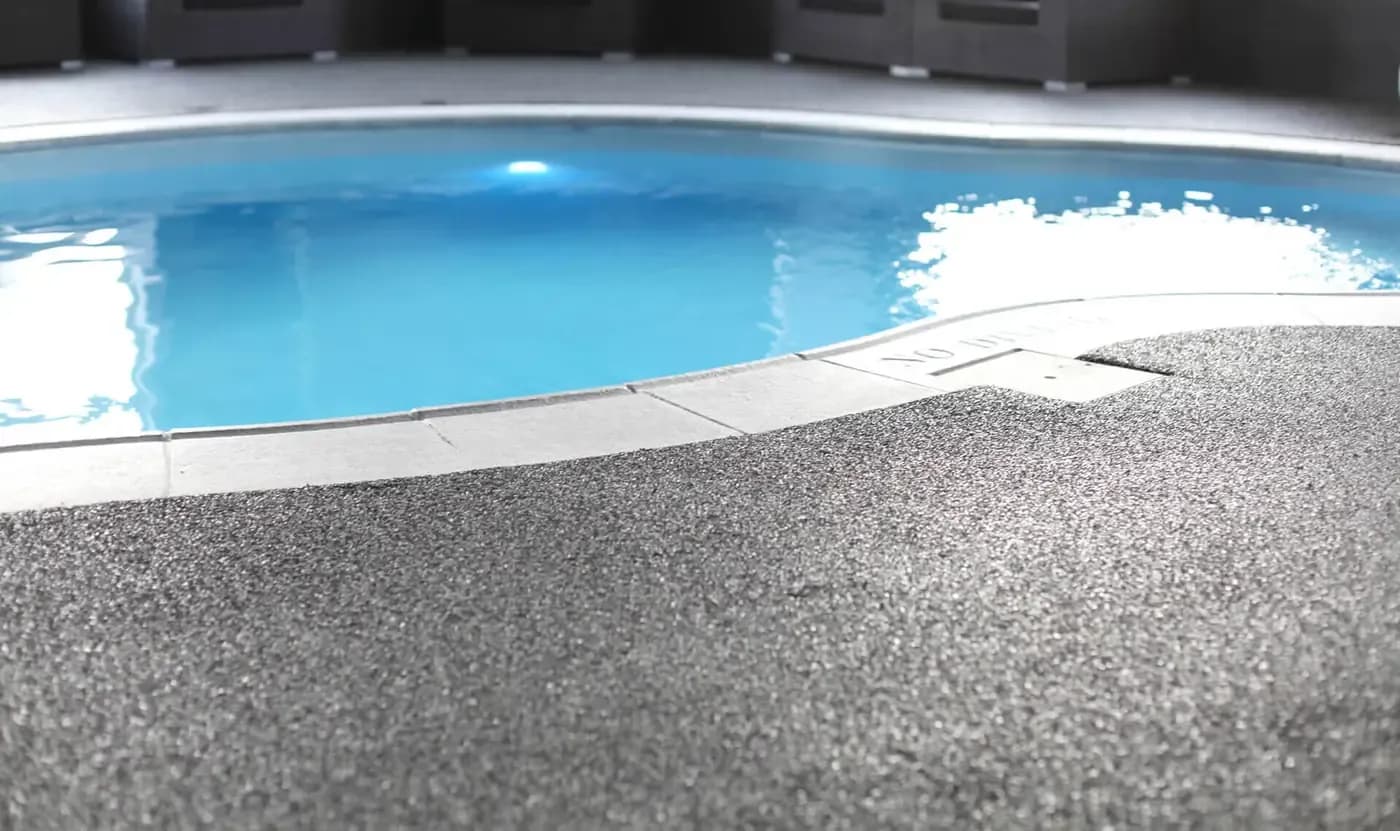
Falls are the risk every senior living operator plans around, and the walkway, courtyard, and pool deck are where they happen. Rubber Stone goes over the concrete a facility already has and turns it into a textured, slip-resistant surface that gives under a fall instead of meeting it. It drains, it runs cooler in July, and it goes in without closing the building, tearing out a slab, or bringing in a dumpster.
Why operators are specifying rubber
- Non-slip: a textured, high-traction finish that keeps its grip when wet, which matters at the pool, under the eaves, and on a frosty January morning
- Soft: recycled rubber granules absorb impact. A fall onto Rubber Stone is a fall onto rubber, not onto concrete
- Permeable: rain and irrigation water drain through instead of sheeting across a walkway and standing in the low spots
- Cooler: rubber does not bank heat the way a slab does, so a south-facing patio stays usable through a North State afternoon
- No demolition: it goes over existing concrete, asphalt, pavers, and tile. Cracks and trip lips disappear under one continuous surface
- Seamless: no joints to catch a walker wheel or a cane tip, and no pavers to heave
- Easy to keep: hose or pressure wash. A clear top-coat re-roll every three to five years keeps the color
Where it goes in a facility
Any outdoor surface a resident uses. The common ones are the entry and drop-off, the walking loops and garden paths, courtyards and patios, pool and spa decks, memory-care secured gardens, and the ramps and steps between them. Indoors, Rubber Stone works in therapy rooms, sunrooms, and covered breezeways.
Color helps. A contrasting border along a path edge or a different blend on a step tread gives residents with low vision a visual cue, and the color chart has more than twenty blends to pick from.
How a facility install goes
- Walk-through with your maintenance or executive director. We measure, note the trip hazards and drainage problems, and bring samples
- Phased schedule so residents always have a route. Most areas are poured and walkable again within a day or two
- Prep: pressure wash, fill cracks and spalls, grind trip lips, prime
- Pour: mixed on site and hand troweled to one seamless surface, wrapping step nosings and ramp edges
- Cure and handoff: a short cure, a walkthrough with your team, and a care sheet for maintenance
ADA and documentation
We keep ramp slopes and transitions compliant and can provide the manufacturer product data, slip-resistance information, and warranty paperwork for your file. Rubber Stone is installed by authorized dealers only, and the installed product carries a five-year manufacturer warranty.
Questions we get
Yes. We work in phases so there is always a clear route, and each area is walkable within a day or two of its pour. We schedule around meal times, activities, and shift changes.
Well. The surface is firm enough to roll on and seamless, so there are no joints for a wheel to catch. It is the same product that goes on pool decks and driveways that see cars every day.
Yes. Rubber Stone is used in therapy rooms, sunrooms, and covered walkways. It is quieter than tile and easier on the knees than concrete.
That is the normal case. Cracks are filled, trip lips are ground down, and the overlay goes on as one continuous surface. If a section is actively sinking we will tell you before we quote.
Get a quote: Senior living facilities
Where it is, what is there now, and what you want. Photos help. We will come out, look, and give you a real number.